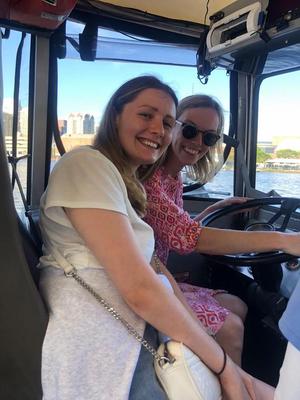
Iona and Lauren both successfully defend their PhD theses with flying colours.
We are delighted that both our clinical academic Dr Iona Ashworth and our PhD student Dr Lauren Stott have successfully defended their PhD theses with very minimal corrections.
We are delighted that both our clinical academic Dr Iona Ashworth and our PhD student Dr Lauren Stott have successfully defended their PhD theses with very minimal corrections. Iona was examined by Professor Ingo Ringshausen (University College London) and Professor Florian Kern (BSMS) and Lauren by Professor Alison Michie (University of Glasgow) and Professor Melanie Flint (University of Brighton).
Iona’s thesis was entitled ‘Investigating the therapeutic potential of targeting NF-kB inducing kinase in Chronic Lymphocytic Leukaemia and Richter’s Transformation’ and explored how Chronic Lymphocytic Leukaemia (CLL) and its aggressive counterpart, Richter’s transformation (RT), hijack signals from the lymph nodes to survive and resist treatment. Her thesis demonstrated that these cancer cells heavily depend on a specific biological pathway (non-canonical NF-κB signalling) for their survival. Crucially, Iona found that blocking NIK, a key enzyme within this pathway, strips away the cancer’s defenses and overcomes existing drug resistance, providing a strong foundation for exciting new targeted therapies. Iona is a clinician and has now returned to her clinical training at Eastbourne Hospital but remains an active member of our research team by consenting patients and helping us obtain clinical material for our research.
Lauren’s thesis was entitled ‘Stratification and selective targeting based on anti-apoptotic protein expression in chronic lymphocytic leukaemia (CLL)’. Lauren’s research also tackled the urgent challenge of treatment resistance in CLL and RT. Her thesis focused on how these cancers evade a standard therapy (venetoclax) by overproducing a survival protein called MCL1. Because targeting MCL1 directly has proven difficult in the clinic, Lauren tested a novel approach: blocking an enzyme called CDK9, which the cancer cells need to manufacture the survival protein in the first place. This strategy successfully starved the cancer cells of MCL1, making them highly vulnerable to standard treatments once again, paving the way for more effective, personalised therapies. Lauren was successful in securing a postdoctoral researcher position funded by CRUK before she had even submitted her thesis! We are delighted she is still part of the blood cancer research team at Sussex and is now working on the therapeutic potential of targeting RUNX1 aberrations in blast-phase chronic myeloid leukaemia research with Dr David Palmer and Dr Rhys Morgan.
We are very proud of them both and we will work with them both over the next few months to publish the contents of both of their theses.